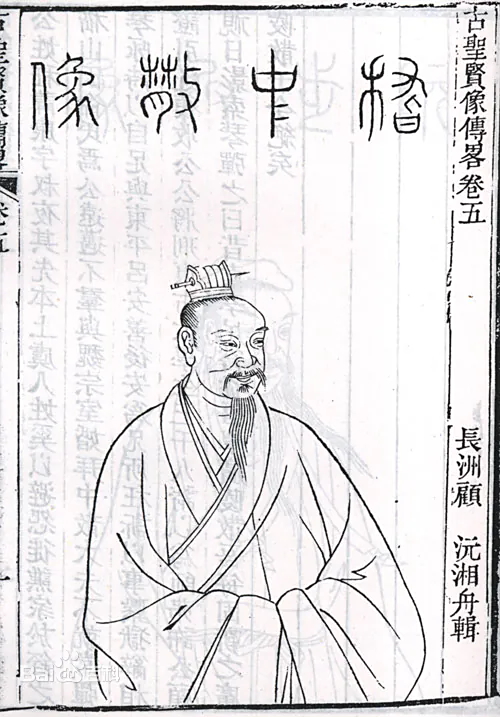
Ji Kang
Introduction
Ji Kang (223–262) was a renowned Chinese scholar, philosopher, poet, and musician during the Wei (220-265) and Jin (265-420) dynasties. He is celebrated as one of the "Seven Sages of the Bamboo Grove," a group of intellectuals and artists who sought to escape the rigid constraints of Confucian orthodoxy and political turmoil through their unrestrained lifestyles and creative pursuits. Ji Kang's life and works embody the spirit of nonconformity and intellectual freedom, making him a significant figure in Chinese cultural history. His contributions to philosophy, literature, and music, particularly his association with the guqin composition Guanglingsan (The Guangling Melody), have left an enduring legacy.
Early Life
Ji Kang was born in the state of Wei during the Three Kingdoms period (220–280). His early life was marked by a deep engagement with classical learning, which laid the foundation for his later philosophical and literary achievements. He was well-versed in Confucian texts but became increasingly critical of their rigid moral prescriptions, which he viewed as incompatible with the complexities of human nature and the realities of life.
As a young man, Ji Kang developed a reputation for his intellectual brilliance and artistic talents. He was particularly drawn to Taoism, which emphasized harmony with nature, spontaneity, and the rejection of artificial social conventions. These ideas would profoundly influence his philosophical writings and his way of life. Ji Kang's disdain for political authority and his commitment to personal freedom led him to reject offers of official positions, a decision that would later contribute to his tragic fate.
Philosophical Contributions
Ji Kang's philosophical writings reflect his deep engagement with Taoist thought and his critique of Confucian orthodoxy. He is best known for his essays, which explore themes such as the nature of human emotions, the role of music in moral cultivation, and the relationship between the individual and society. Among his most famous works is the essay "On the Absence of Sentiments" ("Shiqing Lun"), in which he argues that true sages transcend ordinary human emotions, achieving a state of inner peace and detachment.
Ji Kang also wrote extensively on the philosophy of music, emphasizing its spiritual and ethical dimensions. He believed that music could harmonize the soul and bring individuals closer to the Tao, the ultimate principle underlying the universe. His writings on music reveal his profound understanding of the guqin, a seven-stringed zither that he played with exceptional skill. Ji Kang's philosophical ideas were deeply influential, shaping the intellectual landscape of the Wei and Jin Dynasties and inspiring later generations of thinkers.
Literary Works
Poetry
Ji Kang's poetry is characterized by its lyrical beauty, philosophical depth, and celebration of nature. His verses often reflect his Taoist beliefs, expressing a longing for simplicity, solitude, and harmony with the natural world. Ji Kang's poems are also notable for their emotional intensity and their exploration of themes such as friendship, mortality, and the pursuit of spiritual freedom. His poetic style, marked by its elegance and clarity, has earned him a place among the great poets of ancient China.
Essays
In addition to his poetry, Ji Kang wrote a number of essays that address a wide range of philosophical, ethical, and artistic topics. His essays are distinguished by their incisive arguments, eloquent prose, and innovative ideas. Works such as "On Nourishing Life" ("Yangsheng Lun") and "On the Sound of the Qin" ("Qin Fu") reveal Ji Kang's deep intellectual curiosity and his commitment to exploring the mysteries of existence. These writings not only provide valuable insights into Ji Kang's thought but also serve as important documents of the intellectual and cultural currents of his time.
Role in the Seven Sages of the Bamboo Grove
Ji Kang was the de facto leader of the Seven Sages of the Bamboo Grove, a group of scholars, poets, and musicians who sought to escape the political corruption and social constraints of their era. The Seven Sages, which included figures such as Ruan Ji and Shan Tao, were known for their unorthodox lifestyles, their love of wine and music, and their commitment to intellectual and artistic freedom. They often gathered in a bamboo grove, where they engaged in philosophical discussions, composed poetry, and played music.
For Ji Kang, the Bamboo Grove was not just a physical space but a symbol of resistance against the oppressive norms of society. The Seven Sages' rejection of Confucian orthodoxy and their embrace of aoist principles made them cultural icons, representing the spirit of individualism and nonconformity. Ji Kang's leadership and his contributions to the group's activities cemented his reputation as a central figure in this legendary circle.
Conflict with Authorities
Ji Kang's uncompromising principles and his disdain for political authority eventually brought him into conflict with the ruling powers. He refused to serve as an official in the court, a decision that was seen as a challenge to the established order. His outspoken criticism of the Sima clan, who held significant power during the late Wei Dynasty, further antagonized the authorities.
The immediate cause of Ji Kang's downfall was his defense of a friend, Lyu An, who had been accused of a crime. Ji Kang's eloquent argument in Lyu An's favor was perceived as a direct affront to the Sima clan, leading to his arrest and trial. Despite widespread appeals for clemency, Ji Kang was sentenced to death. On the day of his execution, Ji Kang played the guqin and performed "Guanglingsan," a piece that has since become legendary. His final words, "Guanglingsan will be lost forever," underscore his tragic fate and his enduring legacy.
Legacy and Influence
Ji Kang's life and works have had a profound and lasting impact on Chinese culture. As a philosopher, he challenged conventional wisdom and expanded the boundaries of intellectual inquiry. As a poet and musician, he enriched the artistic traditions of his time and inspired generations of creators. His association with "Guanglingsan" has made this guqin composition a symbol of resistance and artistic integrity.
Ji Kang's legacy is also reflected in the continued fascination with the Seven Sages of the Bamboo Grove, who remain cultural icons in China. Their spirit of freedom, creativity, and nonconformity resonates with people across different eras, making Ji Kang a timeless figure in the history of Chinese thought and art.








